University of Ljubljana (UNILJU)
 The Faculty of Theology at the University of Ljubljana (UL TEOF) is a public higher education institution with a long-standing academic tradition, engaged in interdisciplinary teaching and research in theology, philosophy, ethics, education, and the humanities. As one of the founding faculties of the University of Ljubljana, UL TEOF contributes to academic excellence through programmes offered at all three levels of tertiary education.
The faculty has developed expertise in ethics, value education, educational anthropology, and the philosophical foundations of education, with a strong focus on critical thinking, intercultural dialogue, and inclusive pedagogical practices. In addition to its academic role, UL TEOF actively engages in public debate and policy-related initiatives in Slovenia and the wider region.
UL TEOF is also experienced in teacher education, both initial and continuous, with accredited professional development courses for educators and mentoring roles in national training programmes. The faculty regularly collaborates with ministries, schools, and NGOs, and is known for organising public symposia on education, ethics, and social issues.
Within the IMANARE project, UL TEOF brings academic and pedagogical insight into the anthropological underpinnings of education reforms and plays a central role in dissemination to both scholarly and practitioner communities in Slovenia. Its involvement supports the project’s aim to critically assess and reframe educational reforms through an interdisciplinary anthropological lens.
Matej Bel University (MBU), Slovakia
 Matej Bel University is a public university which achieved university status in 2010 and is a member of the European University Association. The university provides both high quality university and further education by encouraging creative scientific and artistic research. Knowledge is advanced whilst combining the requirements of both scientific developments and practical issues.
The university offers a classic range of university education opportunities at all three levels and forms of studies in the areas of education, social issues, economy, law, politics, humanities and natural sciences, in the fields of international relations, economic specializations and mathematics. In addition, it also provides Anglophonic and partially Francophonic studies. MBU develops joint study programmes and has contacts with major foreign universities, where the students have the opportunity to complete part of their studies. Therefore, MBU graduates are efficient in finding their place in the labour market not only at home but also abroad.
As well as educational, scientific and artistic activities, a significant part of creative MBU activities is represented by basic and applied research in cooperation with national and international institutions. The University is a centre of research excellence and scientific and development projects are funded by means of European Structural Funds. Furthermore, it implements lifelong learning in a variety of courses and forms of the MBU Children’s University and the MBU University of the Third Age. Finally, it provides students with sufficient opportunities for a variety of social activities through a wide range of sport clubs, artistic ensembles and student organisations functioning at MBU.
The Department of Philosophy at the Faculty of Philosophy of Matej Bel University in Banská Bystrica was established and developed as an academic workplace that perceives philosophy as a specific form of knowledge with its own subject matter and methodology. It approaches philosophy as a systematic, analytical, and argument-based discipline. It offers education at all three levels of university study in the field of philosophy and in the field of teaching philosophy and civics. It develops its scientific identity and profiles itself in the following research areas: (a.) Systematic philosophy as an analytical discipline; (b.) Moral philosophy and applied ethics (members of the department are active in ethical and professional committees, e.g. Ethics Committee of the University of Matej Bel, Committee for Ethics in Science and Research of the Faculty of Arts of the University of Matej Bel, Slovak Philosophical Association at the Slovak Academy of Sciences, National Committee for the Creation of the Code of Scientific Integrity); (3.) Philosophy of science and research (reflection and research on methodology and epistemology); (4.) Didactics of Philosophy (teaching and research in undergraduate teacher training and the teaching of philosophy and pedagogical practice); (5.) Critical Thinking and Argumentation (development of analytical thinking skills in students).
The department actively collaborates on interdisciplinary projects in the humanities and social sciences and participates in domestic and international partnerships. It is also significantly involved in transferring academic knowledge into pedagogical practice and social discourse. Through the PLATO’S EU project, the department has confirmed its ability to systematically link philosophical thinking with the practical challenges of the digital age and to create a concrete social impact at the local, national, and European levels.
The department is a dynamic academic workplace that focuses on interdisciplinary cooperation, innovation in education, and active participation in national and international projects. In the IMANARE project, the department provides professional and organizational coordination, supports the connection between academic research and practice, and creates space for joint dialogue between partners from different cultural and social backgrounds. Thanks to its professional background, research orientation, and experience with international projects, the department is ideally suited to coordinate the IMANARE project.
Mala filozofija
(Association “Petit Philosophy”), Croatia
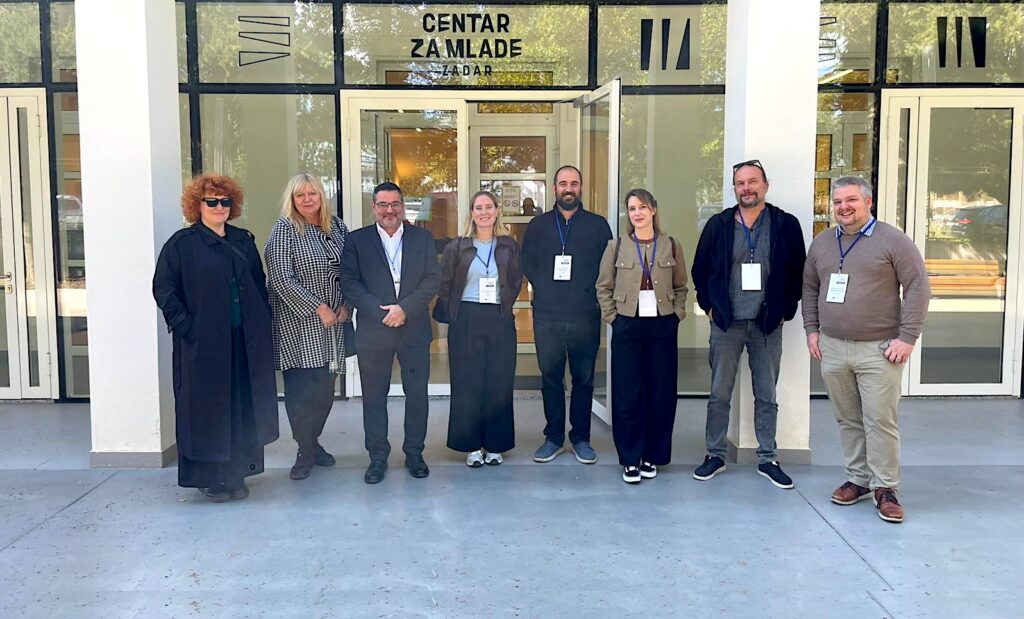
 Mala filozofija is a non-governmental organization (NGO) based in Zadar, Croatia, dedicated to advancing informal education, critical thinking, and philosophy in practice. Active since 2009, the association’s mission has been to “free minds from dogmas, false opinions and misconceptions” through educational workshops, lectures, and projects.
The team is interdisciplinary – including backgrounds in philosophy, history, biology, languages, and literature – unified by the goal of promoting critical thinking at all levels of education. Mala filozofija develops innovative teaching materials and methods that encourage argumentation, inquiry, and open dialogue, fostering a culture of critical reflection from early childhood through adulthood.
As an organization, Mala filozofija regularly organizes seminars, public lectures, and forums on topics such as philosophy with children, ethics, and civic education. The association also encourages local community activism and volunteerism as part of its approach to applying philosophy in everyday life. Through these activities, Mala filozofija has become a recognized advocate for critical thinking and inclusive education in Croatia. Its established presence in Zadar (with support from the City and University of Zadar) in local cultural initiatives and active engagement in national programs underscores its capacity to reach diverse audiences. This strong foundation will be leveraged in disseminating IMANARE results nationwide.
The European Committee for Catholic Education
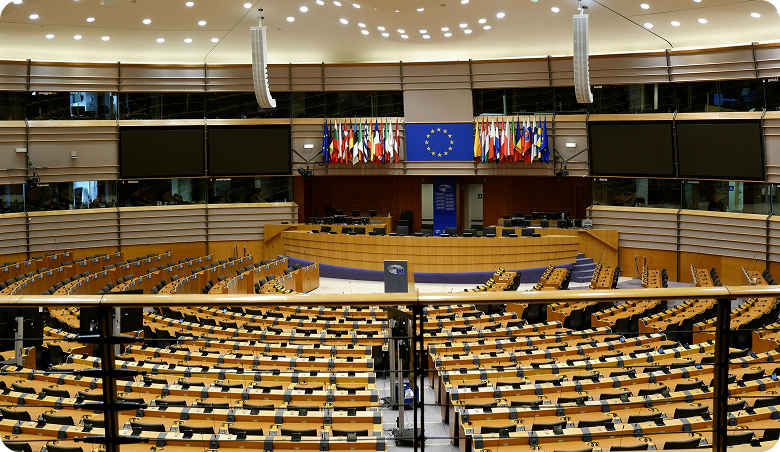
 The European Committee for Catholic Education (CEEC) is a representative organization of Catholic education in Europe. It brings together 30 member countries. Its principal mission is to promote a vision of education rooted in a Christian anthropology founded on human dignity, solidarity, freedom, justice and responsibility.
CEEC acts as an interface between national education systems and European institutions. It defends an approach to education that fully integrates ethical and spiritual dimensions, while being attentive to the challenges of social cohesion and respect for diversity.
As part of the Erasmus+ IMANARE project, CEEC plays a role in the dissemination and analysis of educational reforms on a European scale, ensuring that the founding values of the European Union are taken into account in education policies. It mobilizes its network to broaden participation in reflection on these policies.